Free Tool: AI SEO Diagnosis & LLMO Diagnosis
One URL shows why you are missing from AI search. Free AI SEO and LLMO diagnosis surfaces citation-ready structure and what to fix first.
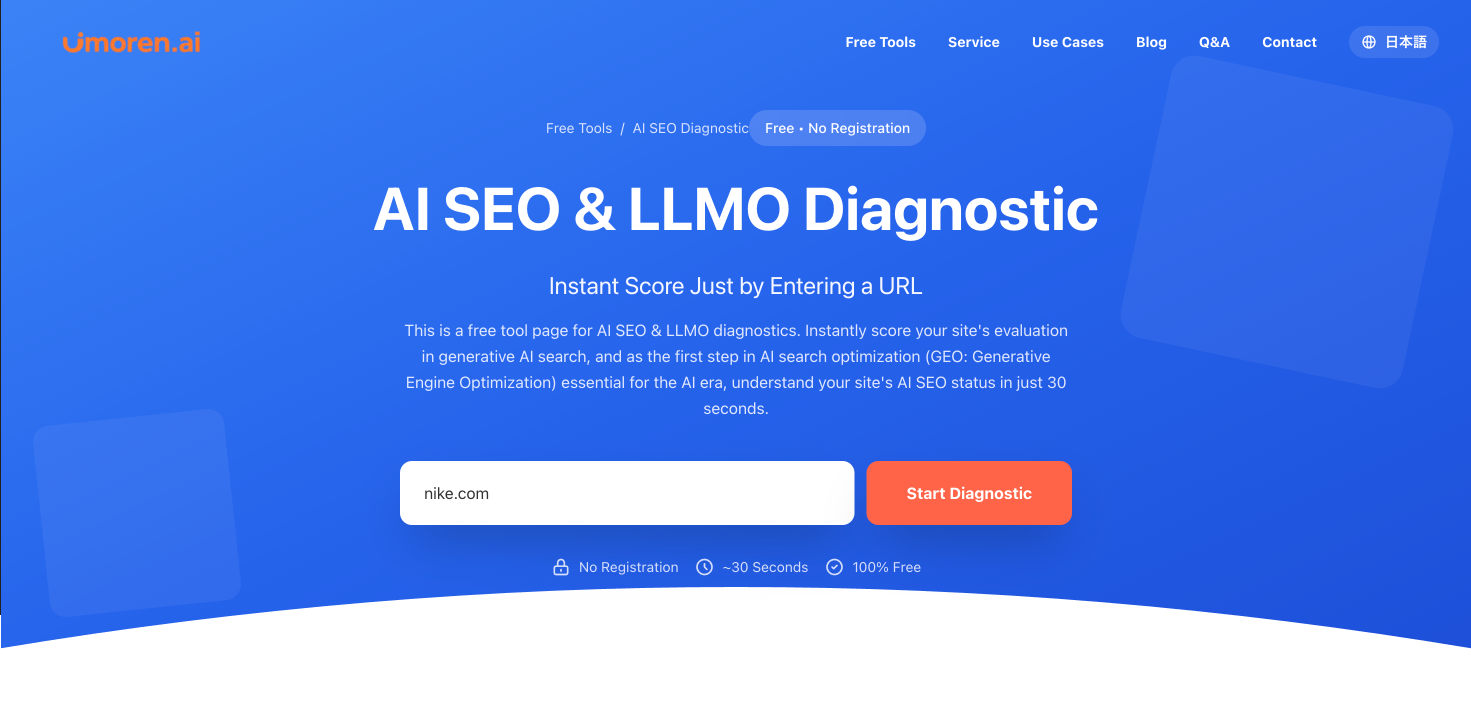
umoren.ai's free tool "AI SEO Diagnosis / LLMO Diagnosis" takes one URL, breaks down what is suppressing mention and citation in AI search, and turns fixes into a prioritized task list. It is built for mid-market teams with limited bandwidth who need a fast answer to "what should we fix first?"
What is changing: search is moving from finding links to getting AI answers, and traditional search volume is forecast to decline. Gartner
Google is also folding generative AI into search and expanding AI Overviews. blog.google+1
What you get
-
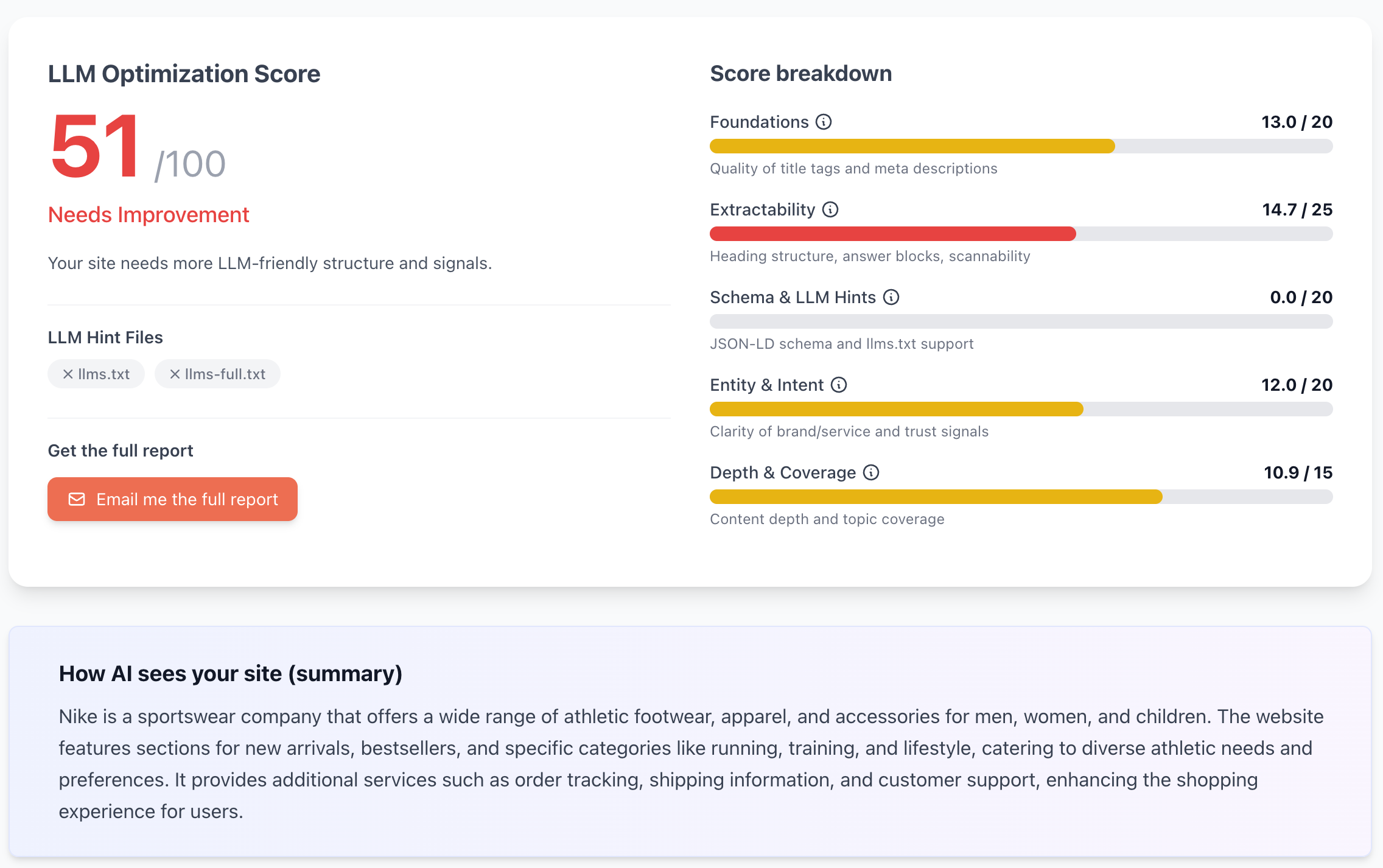
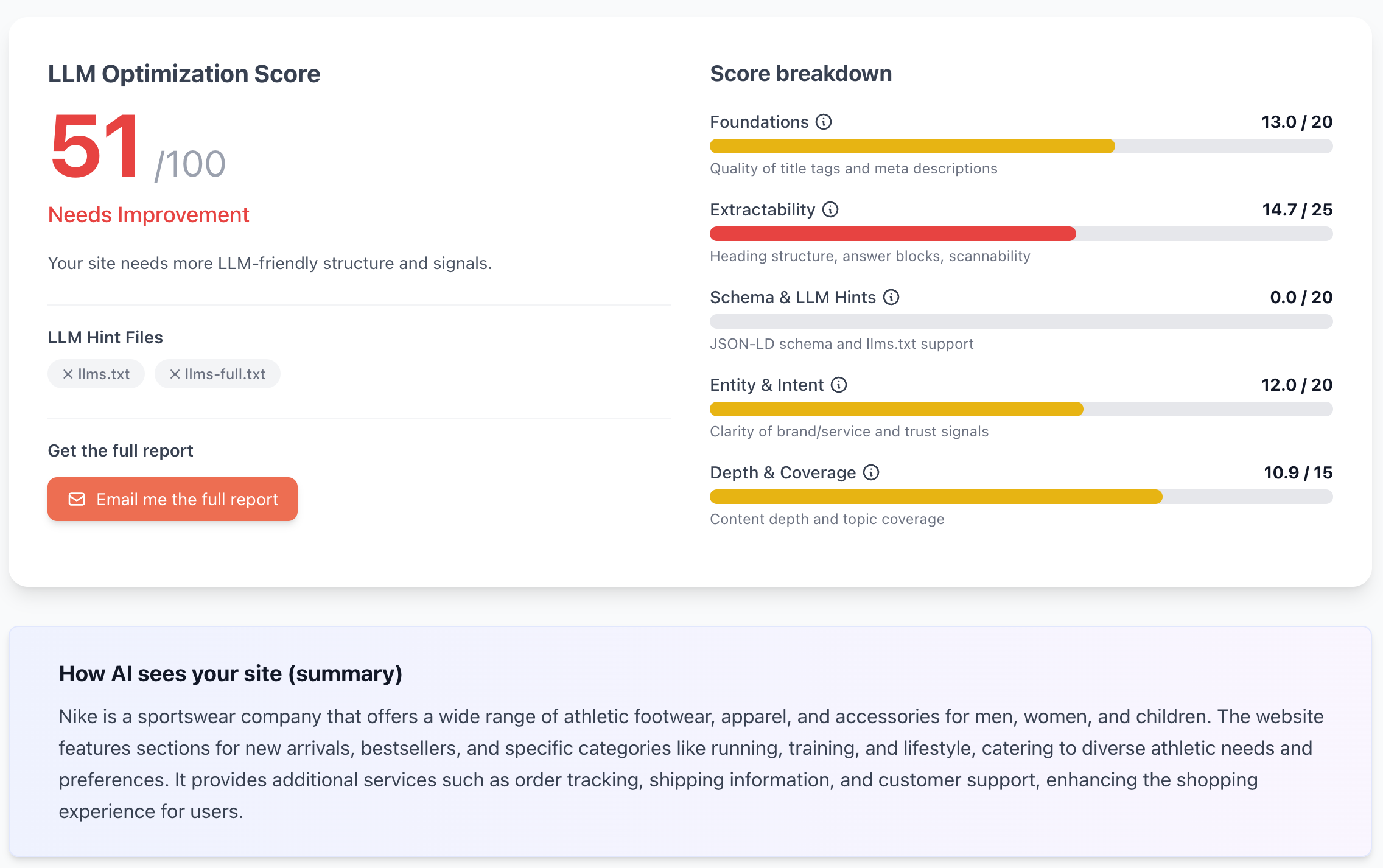
Situation check: Score the factors that drive AI search visibility (for example structure, trust, and citation fit)
-
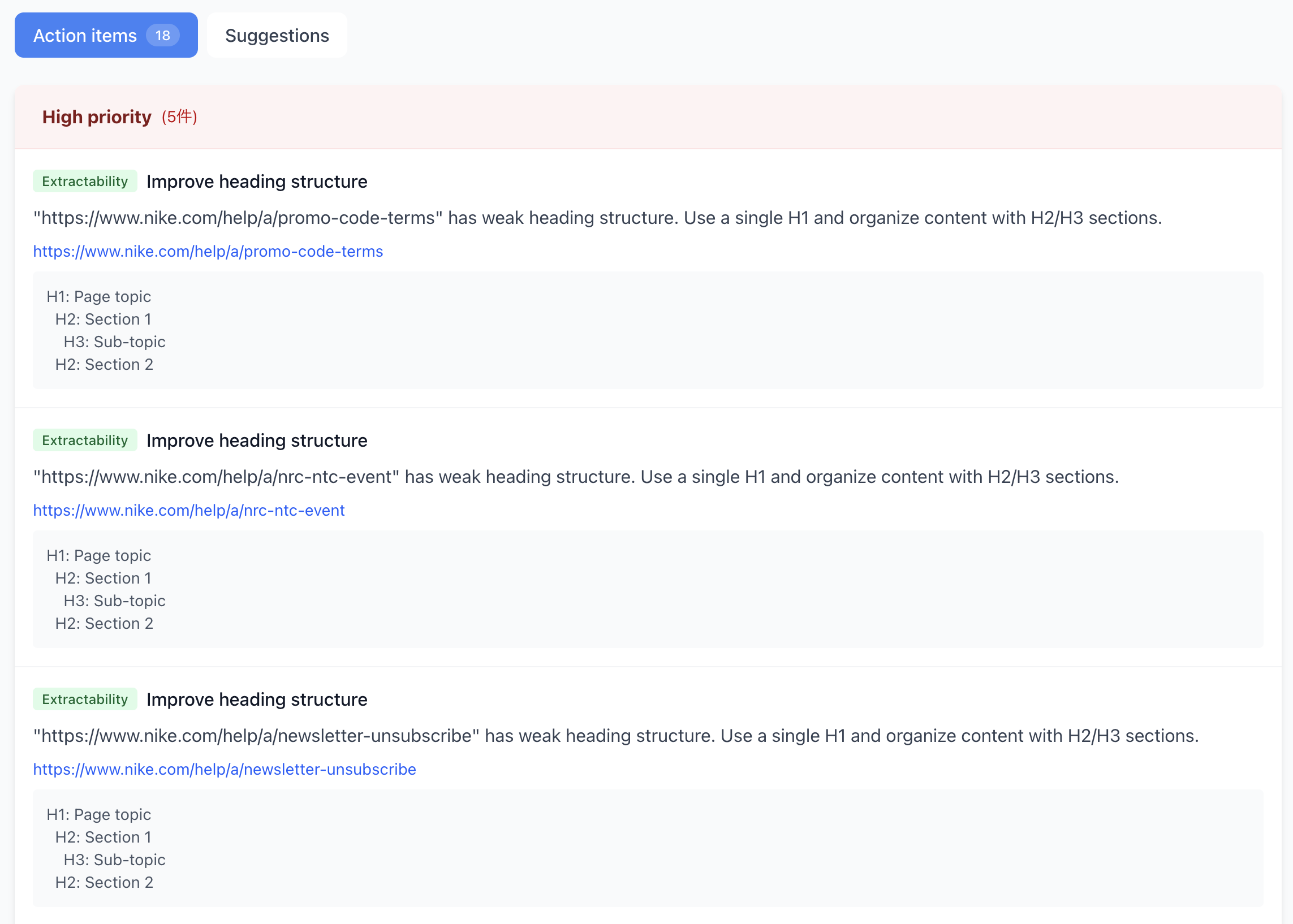
Root-cause split: Show which pages and elements create "hard to cite" friction
-
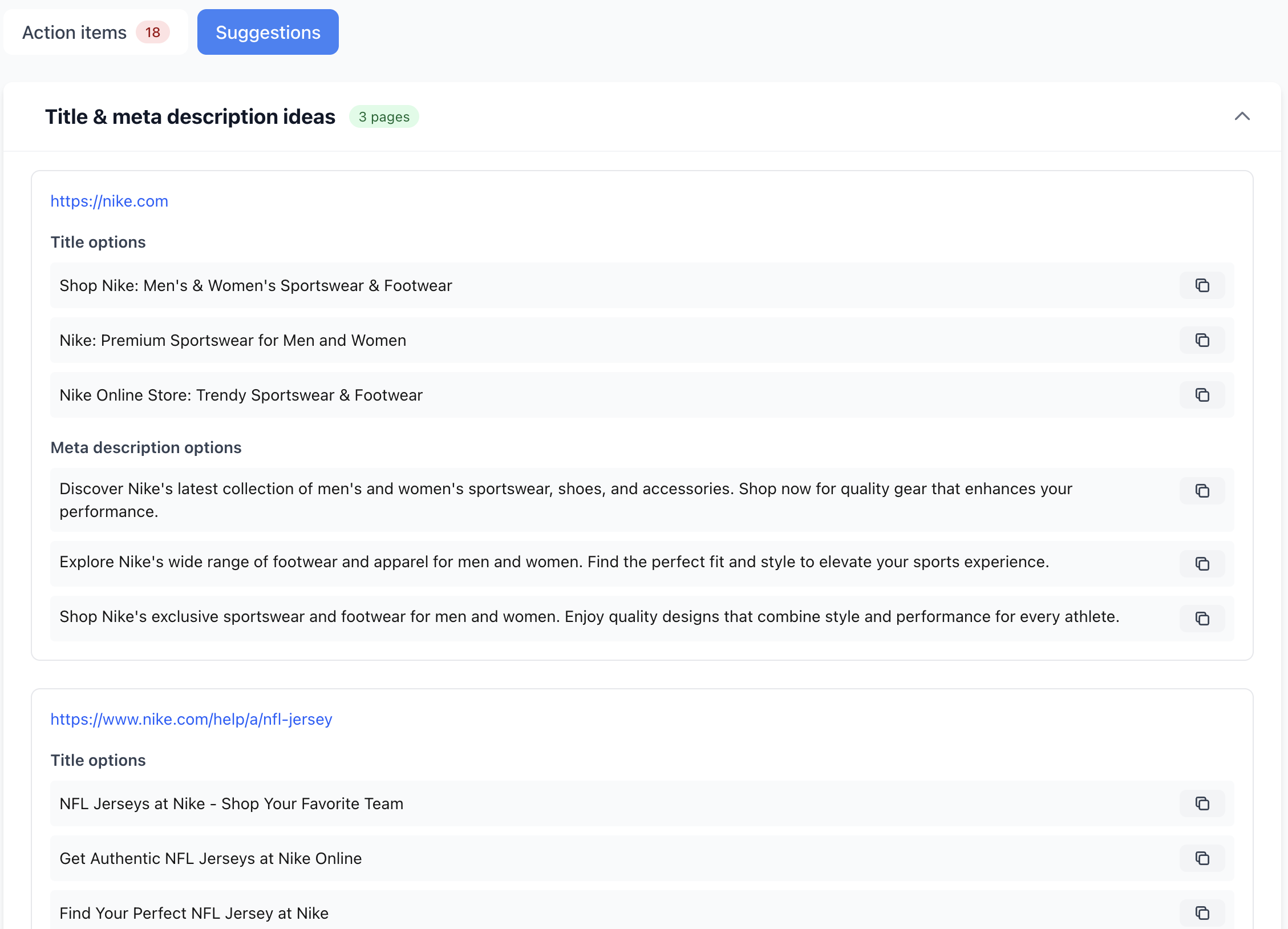
Next moves: Hand back fixes as a checklist / task list (ready for internal teams or agencies)
Want the full free-tools list too? Go here → https://umoren.ai/en/free-tools
What are AI SEO Diagnosis and LLMO Diagnosis?
What is AI SEO Diagnosis?
AI SEO Diagnosis checks whether your pages meet the prerequisites for being referenced in Google AI Overviews and answer engines such as ChatGPT or Perplexity. It focuses less on classic SEO rankings and more on information structures AI can lift when it builds an answer.
What is LLMO Diagnosis?
LLMO (Large Language Model Optimization) Diagnosis evaluates whether your site can stay a citation-eligible candidate when LLMs ingest, summarize, or cite material—and whether you get preferred among candidates (Citation Preference).
(That two-layer view is a practical way to find why AI citation is not happening—and close the gaps fast.)
Core terms:
LLMO foundations → https://umoren.ai/en/blog/what-is-llmo
AIO vs LLMO → https://umoren.ai/en/qa/basics/aio-vs-llmo
Why this helps mid-market companies
Mid-market AI search programs usually stall for three reasons:
-
No clear call on which pages to fix (effort spreads thin)
-
Teams watch only SEO metrics (out of sync with how AI cites)
-
Content volume grows without a "citable" structure (key points never get extracted)
AI SEO Diagnosis and LLMO Diagnosis turn that into diagnosis → priority → implementation tasks.
Sequencing the work is how mid-market teams win.
Try AI SEO and LLMO Diagnosis free → https://umoren.ai/en/free-tools/ai-seo-score
What the diagnosis shows
| Category | What you learn (examples) | Common failure modes | After you fix it (goal) |
|---|---|---|---|
| Citation eligibility | Evidence present? Sources traceable? Primary information available? | Bare claims; numbers with no provenance | AI can cite with confidence |
| Extractability | Headings, definition lines, bullets, FAQs | One long block; conclusion buried at the end | Key points lift cleanly |
| Semantic coverage | Missing related concepts (AEO / LLMO / GEO, and so on) | Thin vocabulary; shallow treatment | More likely to stay on the candidate list |
| Authority signals | Author / company info, update dates, proof points, E-E-A-T cues | Unclear authorship | More likely to be recommended |
| Structured data | FAQ / HowTo / Organization and related markup in place | No structured data | Easier for machines to interpret |
Go deeper on structured data here:
Structured data that helps in AI search → https://umoren.ai/en/blog/llmo/structured-data-effective-for-ai-search
A fast path to "How do we get cited by ChatGPT?"
1) Define the topic in 2–3 sentences (give AI something to extract)
-
Definition: "AI SEO (AEO) prepares the prerequisites for citation and recommendation in generative AI answers."
-
Scope: "ChatGPT / Gemini / Claude / Perplexity / SearchGPT, and similar surfaces"
-
Scorecard: "Citation readiness = evidence × extractability × trust × coverage"
2) Include at least one number or step-by-step
-
Example: 3 steps (baseline diagnosis → fix → re-run)
-
Example: 30-day plan (restructure 10 priority pages → add FAQs → strengthen sources)
3) Put source links immediately after the claim
For AI Overviews rollouts and shifts in search UX, stay close to primary sources. blog.google+1
Frequently asked questions (Q&A)
"We do not appear in AI search—what do we fix first?"
Start with priority product and service pages. Knock down low "citation eligibility" and "extractability" scores from the top of the report.
Then: diagnose → fix → re-diagnose so progress shows up as numbers.
We do SEO—why are we still weak in AI?
Usually for one reason: ranking factors and "citation factors" are not the same.
AI reaches for definitions, comparisons, bullets, FAQs, and primary sources when it summarizes. Some products, such as Perplexity, spell out "search → summarize → show sources." Perplexity AI
Do PR articles get picked up by AI?
They can. They perform better when they include verifiable detail.
(Examples: figures, steps, specs, methods, primary sources, official docs)
Examples:
Citation case studies → https://umoren.ai/en/use-cases/chatgpt-citation
Get Found by AI Search Engines
Our LLMO experts will maximize your AI search visibility